What perforation is

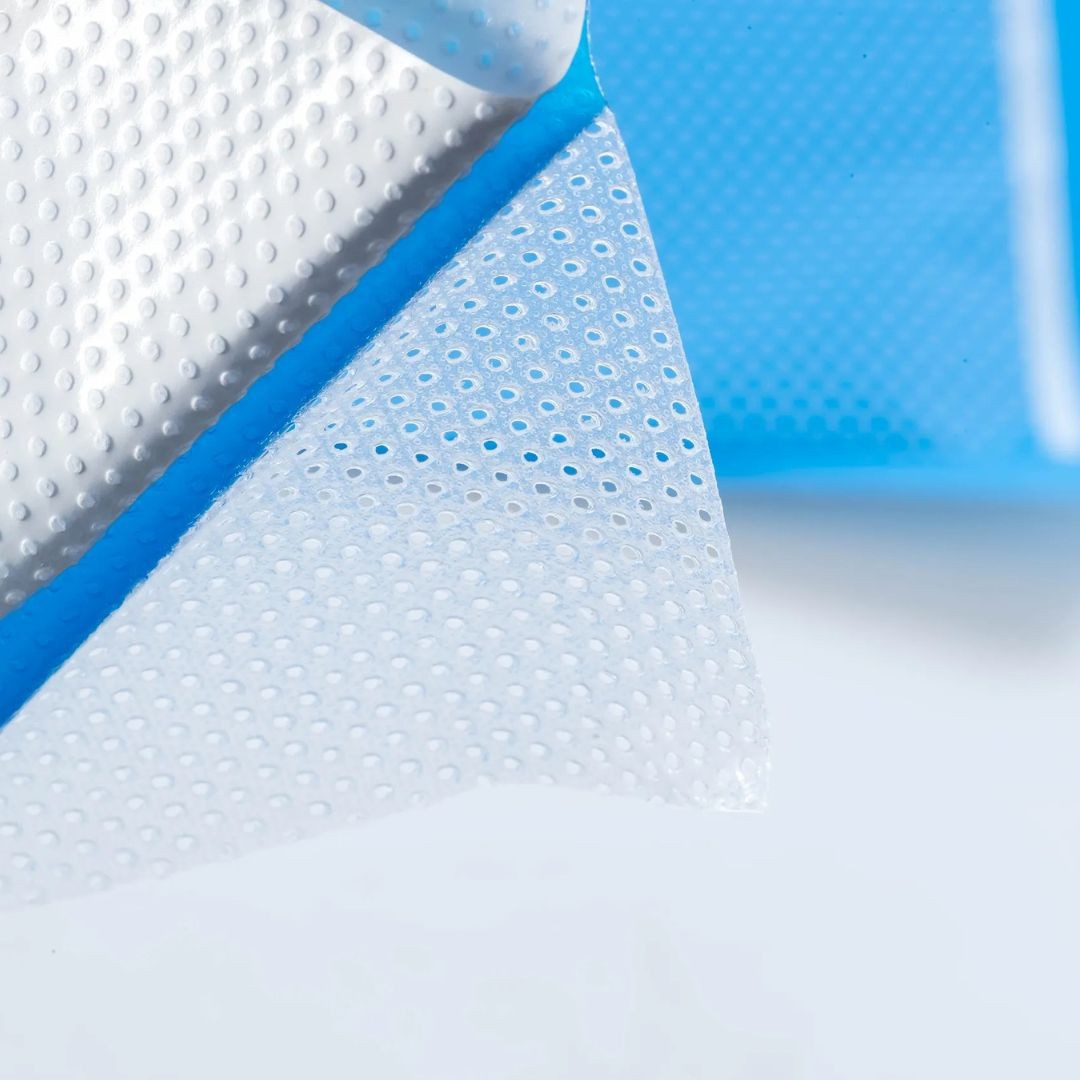
Perforation introduces a controlled open area into films or adhesive constructions. By defining hole size, spacing, and pattern, it enables targeted performance adjustments in otherwise non breathable materials.

The output is perforated rollstock produced to define open area specifications and repeatable pattern tolerances.


Ultrasonic perforation

Ultrasonic perforation is a process used to generate precise and consistent hole patterns. It supports controlled open area targets and repeatable geometries such as 1.6 mm. This approach enables stable processing of perforated rollstock for applications where breathability and fluid transfer must be managed within defined design parameters.


Perforation for breathable films

Why use perforation for breathable films

Perforation is used when MVTR needs to be increased in films that are otherwise non breathable. By introducing a defined open area, it:

  • Improves breathability during wear
  • Enables fluid transfer through layers in flow through constructions
  • Supports moisture management within multilayer medical builds

This allows design teams to adjust transmission properties without fully changing base material selection.


Typical applications

Perforation is commonly applied in:

  • Wound dressings where exudate must pass through a contact layer into an absorbent core
  • Wearable patches where increased breathability supports extended wear time

These applications require controlled moisture handling and consistent structural performance.


Performance characteristics of perforation

Precision patterns for performance and material integrity

Perforation supports defined open area percentages while maintaining structural integrity of the base material. This enables optimized flow through performance while preserving mechanical stability in finished medical constructions.

Clean processing in controlled environments

Perforation is performed in controlled environments to support clean processing and reduce contamination risk. This protects material quality during manufacturing, particularly for skin contact applications.

Compatibility with films and adhesive constructions

Perforation can be applied to thin films and heavy coat adhesive builds. This supports flexibility in construction design and allows breathability and flow through performance to be integrated without altering the overall material platform.


Discuss your perforation requirements

If you are developing wound dressings or wearable patches and require perforated rollstock with defined open area specifications, contact us to review perforation patterns and application requirements.