Performance benefits
Atraumatic removal
Silicone gel adhesives support atraumatic removal due to low peel force characteristics that help minimize discomfort and reduce epidermal stripping. This helps preserve the skin’s natural barrier, which is particularly important when devices are changed frequently or when skin is thin, fragile, or compromised.
Repositionable performance
These silicone gel adhesives can be removed and reapplied multiple times because of cohesive gel properties, while maintaining tack and skin protection. This supports clinical situations where wound inspection, sensor adjustment, or placement correction is required without increasing irritation risk.
Hydrophobic barrier protection
Silicone gel adhesives provide a hydrophobic barrier that can help protect the periwound area by limiting exposure of surrounding skin to wound exudate. By reducing unintended moisture spread, they support maceration control at wound edges.
High conformability on the body
Due to soft flow characteristics, silicone gel adhesives conform closely to body contours. This supports consistent contact, including on mobile or bony anatomical areas where uniform adhesion may be more difficult to achieve.
Biocompatible and hypoallergenic
Formulations are designed for sensitive skin types, with non irritating and non sensitizing profiles and referenced ISO 10993 compliance. This supports applications where long wear performance and patient sensitivity require careful management of skin response.
Long wear
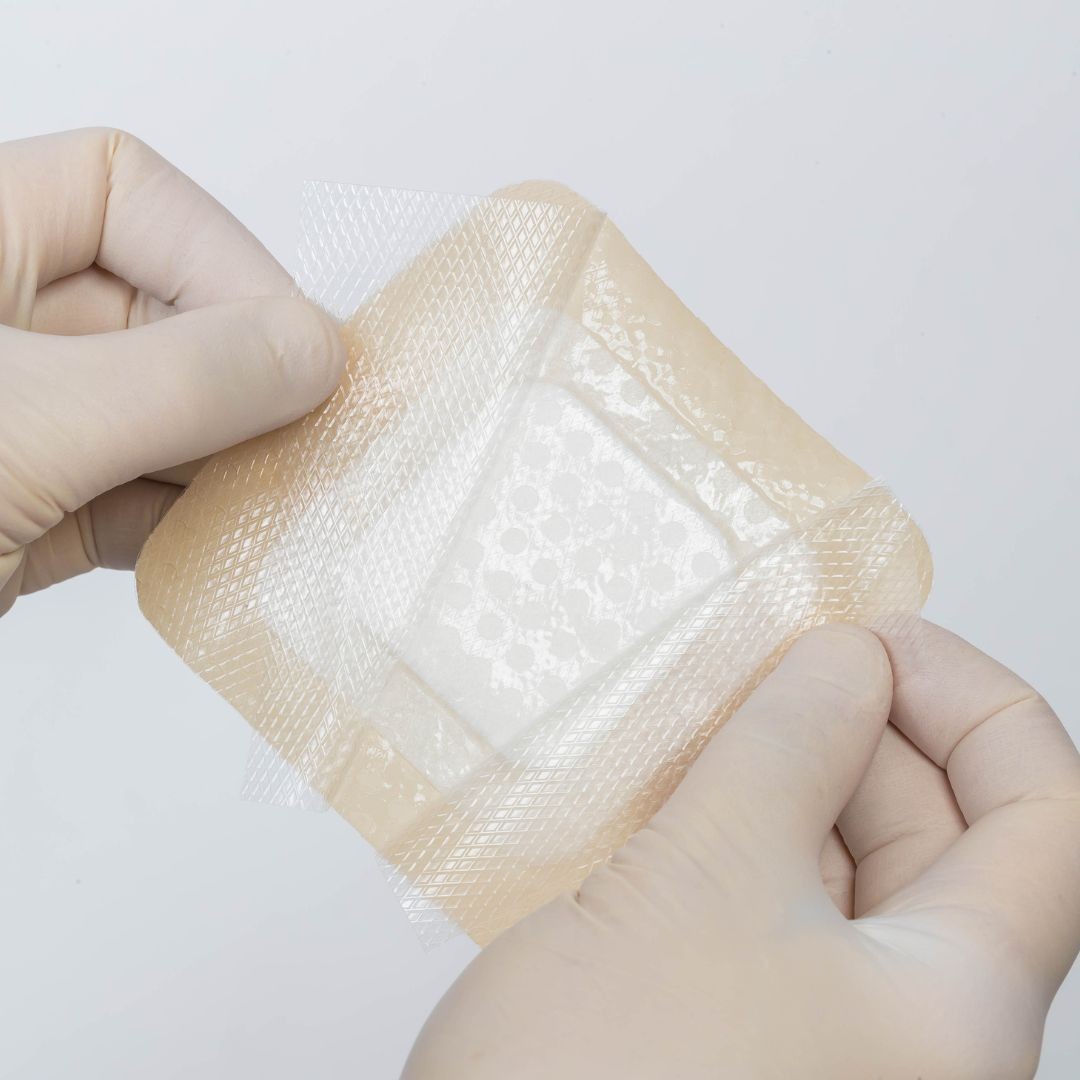
Silicone gel adhesives are available in perforated formats designed to optimize moisture vapor transmission rates. These configurations support extended wear comfort and provide flexibility depending on application moisture conditions.
Product specifications
Silicone gel adhesive constructions are available in:
Single coated formats
Double coated, including differential constructions
Trilaminate PU film constructions
Breathability can be tailored through optional perforation patterns for enhanced fluid management. The material is compatible with EtO sterilization processes.