
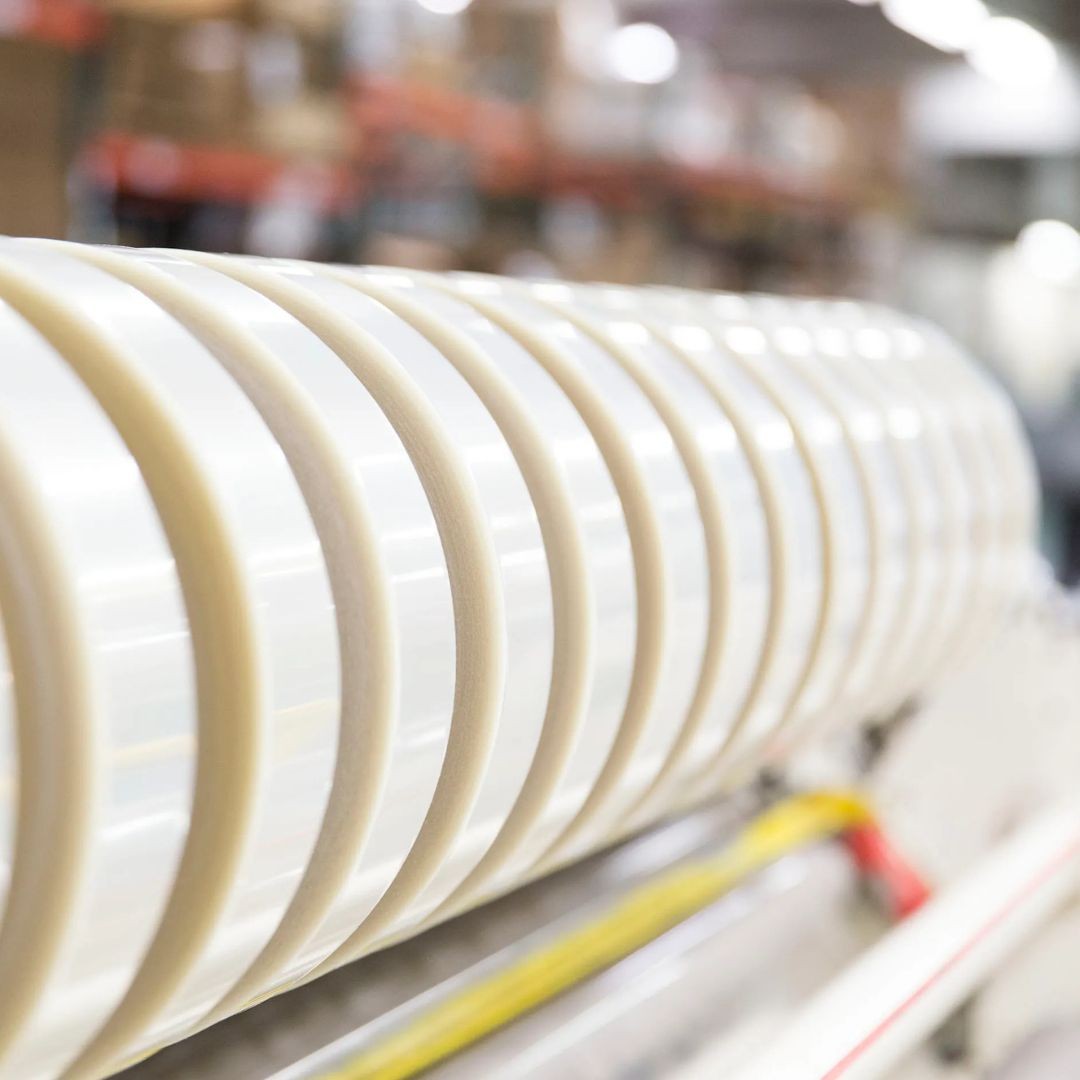
What slitting is

Slitting converts large format master rolls into controlled, repeatable widths suitable for specialized device assembly. It ensures that adhesive coated materials are supplied in formats compatible with subsequent converting, feeding, and placement steps.

The result is consistent roll geometry with defined width tolerances and edge quality suitable for regulated production workflows.


Slitting of adhesive-coated rolls

Why use slitting

Slitting is used when transitioning from raw material production into specialized device assembly and roll widths must match manufacturing equipment.

It is also required when supplying narrow width rolls for automated pick and place systems, where consistent width and clean edges support reliable, high speed operation.

By aligning roll dimensions with equipment specifications, slitting helps reduce feeding variability and supports stable line performance.


Typical applications

Slitting is commonly applied in:

  • Transition from raw material production to specialized device assembly

  • Supplying narrow width rolls for automated pick and place machines

These use cases require repeatable roll dimensions and controlled edge quality to maintain process stability.


Performance characteristics of slitting

Tight tolerances for automated assembly

Slitting supports tight width tolerances, which are critical for automated high speed assembly lines. Controlled width precision reduces variability during material feeding and placement when narrow width adhesive coated rolls are used in repeatable manufacturing workflows.

Low debris edges for controlled production

Slitting minimizes edge pick and particulate shedding. Clean, debris free edges support controlled production environments and reduce contamination risk during converting and assembly.

Improved edge quality also supports smoother unwinding and handling in high volume production.


Discuss your slitting requirements

If you require narrow width adhesive coated rolls with defined width tolerances for automated assembly, contact us to review slitting requirements, target widths, and tolerance expectations.